Pool Water Alkalinity and Hardness: What They Are, Target Levels, and How to Correct Them

In Brief
Total alkalinity (TA) and calcium hardness (CH) are two pool water parameters that are often overlooked — yet without them properly set, pH becomes unstable and chlorine loses effectiveness. Alkalinity should sit between 80 and 120 ppm; it acts as a pH buffer. Hardness should be between 200 and 400 ppm; too low and the water attacks surfaces and equipment, too high and limescale forms. Both must be corrected before adjusting pH — not after.
Total Alkalinity (TA): The pH Stabilizer
What It Is
Total alkalinity measures the concentration of carbonates and bicarbonates dissolved in the water. These ions have a fundamental property: they absorb acidic or basic fluctuations and prevent the pH from swinging in all directions. Alkalinity acts as a "buffer" for pH.
Alkalinity and pH are not the same thing. pH measures the current level of acidity or basicity in the water. Total alkalinity measures the water's capacity to resist changes in that pH. Water can have a correct pH and completely imbalanced alkalinity — and in that case, the pH won't stay stable for long.
What Happens When TA Is Too Low (below 80 ppm)
The water's pH becomes volatile and reacts strongly to the slightest external factor: adding chemicals, rain, swimmers, evaporation. Practical consequences:
- Chlorine loses effectiveness — its disinfecting power is directly tied to pH stability
- The water can become corrosive to equipment, surfaces and seals
- Swimmers may experience skin or eye irritation
- The water may turn cloudy or greenish despite correct chlorine levels
What Happens When TA Is Too High (above 120 ppm)
pH correction products have little effect — the water resists all adjustment attempts, leading to frustration and overdosing. Limescale deposits form on surfaces and in pipes, and the water can turn cloudy.
Target Range and Corrections
Recommended alkalinity: 80–120 ppm.
| TA Level | Situation | Action |
|---|---|---|
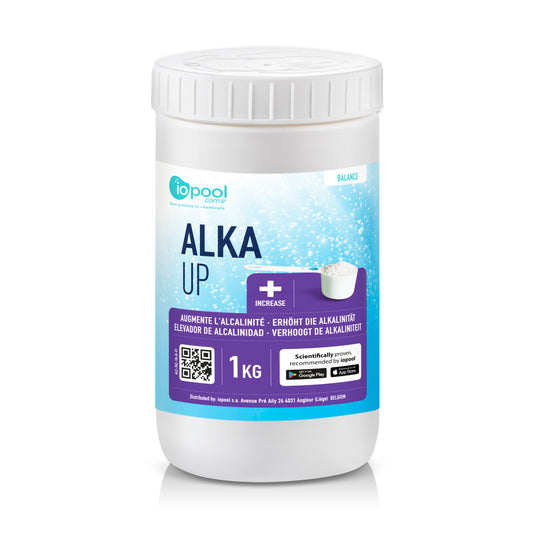
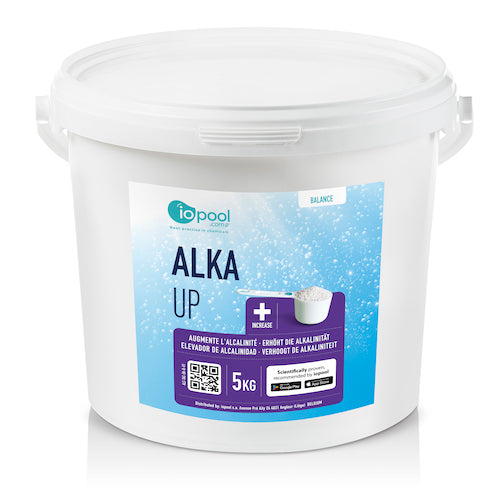
| Below 80 ppm | Volatile pH, corrosive water | Add TA+ / Alka+ (sodium bicarbonate) |
| 80–120 ppm | Ideal | No action needed |
| Above 120 ppm | pH hard to correct, limescale risk | Add pH decreaser; aerate the water |
How to raise TA: dissolve the alkalinity increaser (TA+, Alka+) in a bucket of water, then spread it evenly around the pool with the pump running. Wait a few hours before retesting.
How to lower TA: add a pH decreaser (acid) and actively circulate the water. Aeration also helps naturally bring down a slightly elevated TA over time. Calcium Hardness (CH): Not Too Hard, Not Too Soft
What It Is
Calcium hardness (CH) measures the concentration of dissolved calcium and magnesium in the water. It's directly linked to the nature of the tap water in your area: regions with hard water naturally have a high CH; soft-water regions have a low CH.
Contrary to what you might think, very soft water is not a good thing for a pool. Neither is very hard water. Both extremes create real problems.
What Happens When CH Is Too Low (below 200 ppm)
Soft water is aggressive water. It actively seeks out the minerals it lacks from the materials that make up your pool: concrete, liner, seals, plumbing. Over time this causes premature surface and equipment degradation, corrosion of metal parts, and pH instability that becomes increasingly difficult to manage.
What Happens When CH Is Too High (above 400 ppm)
Very hard water causes limescale deposits on pool walls, in the filter, on the jets and in the pipes. These build-ups reduce filtration efficiency and are difficult to remove. The water can also turn cloudy and milky despite correct pH and chlorine levels.
Target Range and Corrections
Recommended hardness: 200–400 ppm, ideally 250–300 ppm for most pools.
| CH Level | Situation | Action |
|---|---|---|
| Below 200 ppm | Aggressive water, surface attack | Add CH+ / calcium chloride |
| 200–400 ppm | Ideal | No action needed |
| Above 400 ppm | Limescale, cloudy water | Partial drain and refill with softer water |
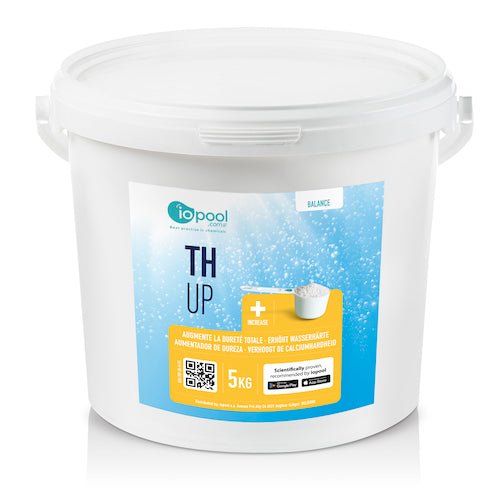
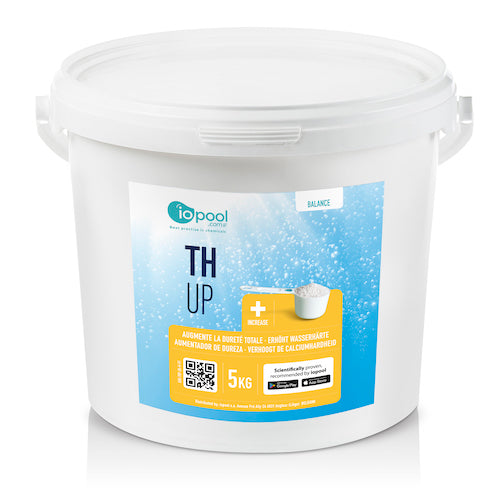
How to raise CH: dissolve the hardness increaser (CH+, calcium chloride) in a bucket of water, then distribute it around the pool. Recheck after a few hours of pump circulation.
How to lower CH: the only effective solution is dilution — partially drain the pool and refill with softer water. No chemical product can directly lower CH. A water softener at the fill point can be an option in very hard-water areas.
The Right Order for Balancing Pool Water
This is where most pool owners make mistakes. The correct sequence is:
- Adjust hardness (CH) first
- Adjust alkalinity (TA) second
- Adjust pH once the first two are stable
- Adjust chlorine last
This order isn't arbitrary. Alkalinity determines pH stability, and pH determines chlorine effectiveness. If you dose chlorine before stabilizing the pH, part of the treatment is wasted. If you correct pH before alkalinity, your corrections will be short-lived.
Parameters at a Glance
| Parameter | Full Name | Ideal Range | Too Low | Too High |
|---|---|---|---|---|
| TA | Total Alkalinity | 80–120 ppm | Volatile pH, corrosive water | pH hard to correct, limescale |
| CH | Calcium Hardness | 200–400 ppm | Aggressive water, surface damage | Limescale, cloudy water |
How to Measure TA and CH
Both parameters are measured in ppm and can be tested with multi-parameter test strips or liquid colorimetric kits. Liquid kits are more accurate, especially for finer readings.
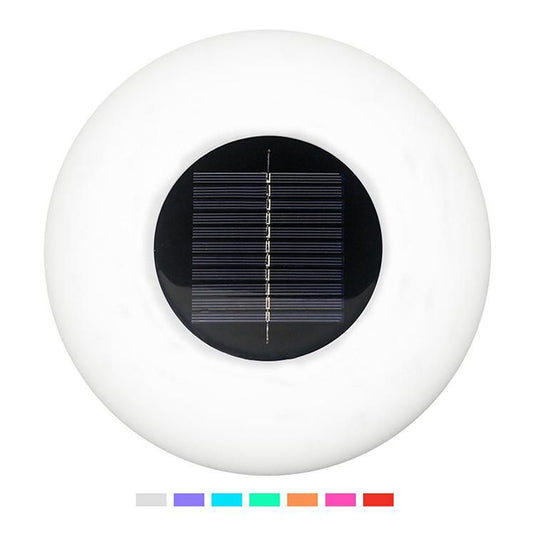
A connected analyzer like the iopool EcO probe continuously monitors pH, redox (ORP) and temperature, and generates treatment recommendations that factor in the overall balance of your water. For TA and CH specifically, a manual test at pool opening, mid-season, and after any significant water addition is sufficient in most cases.
FAQ
What's the difference between alkalinity and pH? pH measures the current acidity or basicity of the water on a scale from 0 to 14. Total alkalinity measures how resistant the water is to changes in pH. You can have a correct pH with poor alkalinity — and the pH won't stay stable. Alkalinity is the foundation; pH is the result.
Why must alkalinity be adjusted before pH? Because alkalinity determines pH stability. If you correct pH first without fixing alkalinity, the correction won't last — the water lacks the buffering capacity to hold the new value. Always sequence: CH → TA → pH → chlorine.
Can hard tap water affect my pool's chemical balance? Yes, directly. Hard tap water brings calcium into the pool every time you top up. Over a season, this can push CH above the recommended range, leading to limescale deposits and cloudy water. It's worth testing CH at opening if you live in a hard-water area.
Does rain affect alkalinity or hardness? Rain primarily affects pH and can dilute alkalinity slightly, since rainwater is naturally soft and slightly acidic. A heavy rainfall can lower both TA and pH. Always retest after significant rain and adjust in the correct order.
What product corrects low alkalinity? Sodium bicarbonate — sold under names like TA+, Alka+, or alkalinity increaser. It specifically raises total alkalinity without drastically affecting pH. It's different from baking soda used in cooking (same molecule, but pool-grade formulation).