Pollen, Flowers, Seeds: How to Avoid Cloudy Water in Spring

Every spring, the same scenario plays out. You open your pool, the water looks decent — and then within a few days, it turns cloudy, yellowish, or greenish, even though your chemical levels seem fine. No algae in sight, chlorine in range, pH correct. So what's going on?
Most of the time, the answer is blowing in the wind.
What Pollen and Organic Debris Actually Do to Your Pool
Pollen, flower petals, tree seeds (think cottonwood fluff, maple samaras, pine pollen dust) — all of this ends up in your pool during spring. It's not just an aesthetic nuisance. These organic particles create real water chemistry problems.
First, they consume chlorine. Organic matter oxidizes in water, and that oxidation process burns through your free chlorine. The more debris, the faster your chlorine drops — sometimes faster than you're adding it back.
Second, fine particles like pollen are often too small to be efficiently captured by the filter, especially sand filters. They pass right through and stay suspended in the water, giving it that characteristic hazy or milky look. This is sometimes called "pollen turbidity" — it has nothing to do with algae or a pH imbalance.
Third, decomposing organic matter releases nutrients that algae love. Even if you don't see algae yet, you're feeding the conditions for a bloom if you let the situation drift.
Why Spring Makes It Worse
Spring is essentially a perfect storm for pool water quality:
- High pollen and debris load: trees and flowers are at peak production between April and June in most of Europe and North America
- Rising temperatures: warmer water accelerates bacterial and algae growth
- Unstable chemistry: after winter or early-season startup, your water balance is often still finding its equilibrium
- Increased bather load: as soon as the sun comes out, people jump in — adding sunscreen, sweat, and other organic compounds to the mix
None of these factors is dramatic on its own. Together, they can overwhelm a pool that isn't being monitored closely enough.
How to Keep Your Water Clear During Pollen Season
Skim more often — it's the simplest thing you can do
A surface skimmer net takes 2 minutes and removes the bulk of floating debris before it sinks and starts decomposing. During heavy pollen or bloom periods, skimming once a day (or even twice) makes a noticeable difference. Don't underestimate this step — it reduces the organic load before it ever becomes a water quality problem.
Run your pump longer
More filtration means more passes through the filter, which gives it more chances to capture fine particles. During peak spring weeks, consider running your pump 10–12 hours per day instead of the usual 8. If you have a programmable timer, set it and forget it.
Shock your pool regularly
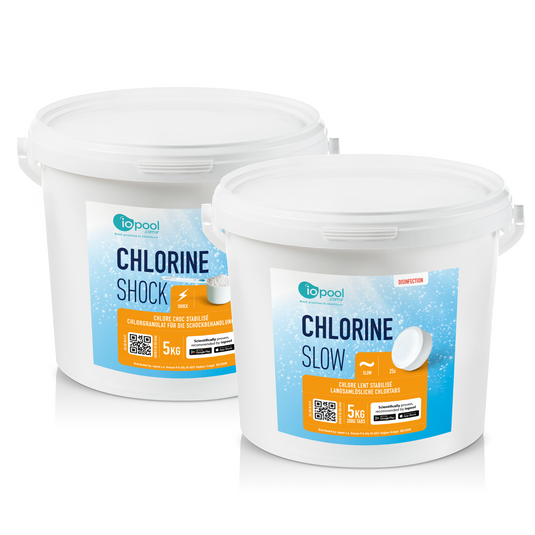
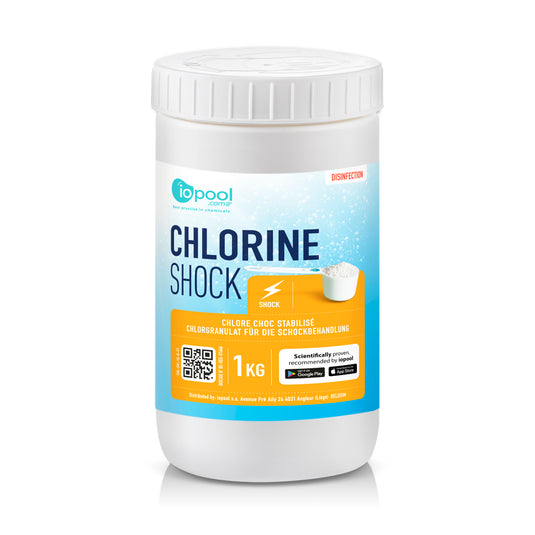
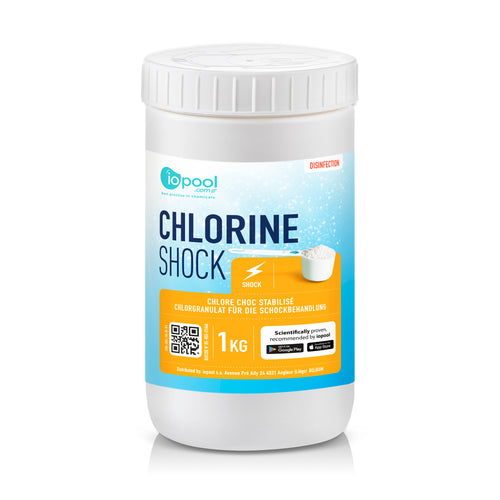
A shock treatment (fast-acting chlorine) oxidizes the organic matter that's building up and resets your free chlorine levels. During spring, one shock treatment every 1–2 weeks is a reasonable rhythm if you're seeing significant debris input. Don't wait for the water to turn cloudy before acting — shock preventively.
Use a clarifier or flocculant if needed
If the water is already hazy and your chemistry is otherwise correct, a clarifier can help. Clarifiers work by binding tiny particles together into larger clumps that your filter can actually capture. A flocculant does the same thing but causes particles to sink to the bottom, where you then vacuum them to waste. Both are useful tools — but they treat the symptom. The root cause is still the organic load coming in.
Check your filter and clean it
A clogged filter doesn't just lose efficiency — it can actually push debris back into the water. During spring, check your filter pressure more often and backwash or clean it as needed. A clean filter working at full capacity is one of your best defenses against pollen turbidity.
Monitor your chemistry more frequently
Spring is not the time to test once a week and hope for the best. Ideally, check pH, chlorine, and ORP every 2–3 days. Pollen load can drop free chlorine faster than expected, and a pH drift amplifies the problem (at pH above 7.8, your chlorine becomes significantly less effective).
What About Seeds and Flower Petals?
Heavier debris like flower petals, catkins, or tree seeds behave a little differently. They're usually easier to filter or skim, but they decompose faster once they sink. If you see them accumulating on the pool floor, vacuum promptly — don't let them sit and break down.
Some seeds and plant matter also contain natural pigments or tannins that can stain the pool walls or give the water a brownish tint. This is particularly common with certain tree species (oak, pine, plane trees). A shock treatment and good filtration usually take care of it, but if staining persists on the walls, a specific descaler or stain remover may be necessary.
In Summary
Cloudy spring water is rarely a mystery — it's organic matter getting ahead of your maintenance routine. The fix isn't complicated, but it does require staying proactive: skim regularly, run the pump enough, shock preventively, and keep a close eye on your chemistry during the weeks when nature is at its most generous with pollen and seeds.
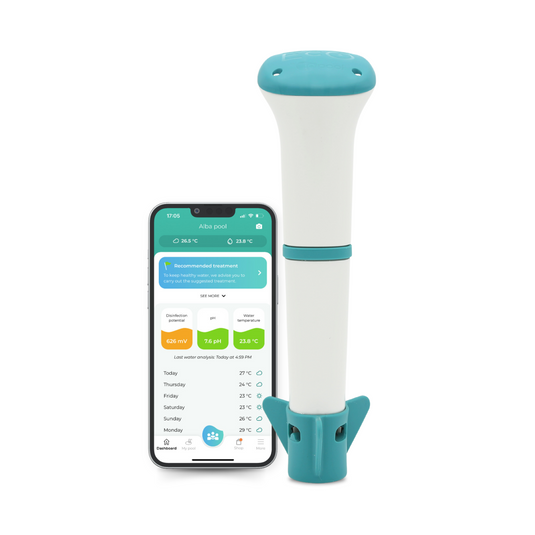
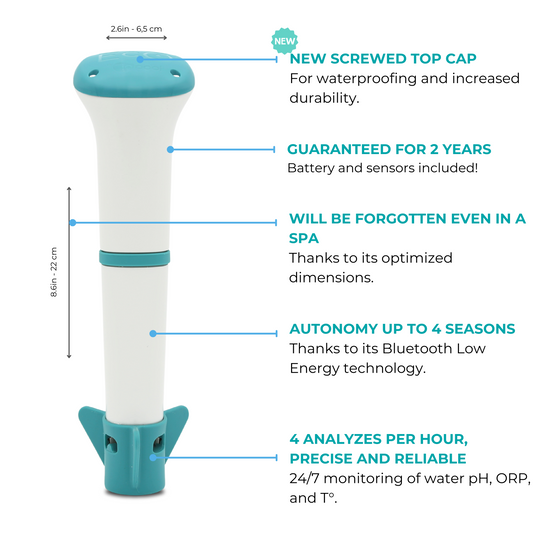
If you're monitoring your pool with a connected analyzer, pay attention to ORP drops in particular — they're often the earliest signal that organic load is climbing and chlorine is being consumed faster than usual. Catching it early means a quick correction rather than a full recovery.
Compre los esenciales