Liquid Chlorine vs Chlorine Tablets: Differences, Pros and Cons, and How to Choose

In Brief
Liquid chlorine and chlorine tablets both disinfect pool water effectively, but they work differently. Tablets are the go-to for private outdoor pools: slow-dissolving, stabilizer included, easy to manage. Liquid chlorine acts faster, doesn't raise the stabilizer level, but has a very high pH and a short shelf life. For most pool owners, tablets handle day-to-day maintenance — liquid chlorine steps in when you need to act quickly or avoid adding more stabilizer.
How Chlorine Works in a Pool
Once dissolved in water, chlorine releases hypochlorous acid, which destroys bacteria, viruses, algae and other contaminants by breaking down their cell walls. As it reacts, it gets used up — which is why regular additions are needed.
Two factors speed up its disappearance:
- Sunlight: UV rays can destroy up to 90% of free chlorine in just a few hours on a sunny day. Adding a stabilizer (cyanuric acid) protects against this.
- Organic matter: when chlorine reacts with sweat, body oils or sunscreen, it forms chloramines — compounds that reduce its disinfecting power and cause the characteristic "pool smell." A strong smell is usually a sign that active chlorine is exhausted and needs replenishing — not that there's too much of it.
The free chlorine level to maintain is between 1 and 4 ppm, ideally 2 to 3 ppm for comfortable swimming and effective disinfection.
Liquid Chlorine
What It Is
Pool liquid chlorine is a solution of sodium hypochlorite — the same molecule as household bleach, but at a much higher concentration. Standard household bleach typically doesn't exceed 7% active chlorine, while pool liquid chlorine contains between 10 and 12%. Regular bleach can work in a pinch, but the quantities required are large and the cost-effectiveness is poor.
It's commonly used in public pools and high-traffic facilities, where it's dosed in large quantities through automatic pumps.
Advantages
- Fast-acting: dissolves immediately and gets to work without delay
- No stabilizer: doesn't raise the CYA level — ideal mid-season when stabilizer is already high, or for any situation where you need to chlorinate without adding more
- Practical for large volumes: easy to dose in significant quantities with automated systems
Disadvantages
- Very high pH (~13): every addition risks raising the water's pH, which should sit between 7.2 and 7.6. A pH that's too high reduces chlorine effectiveness and can accelerate equipment corrosion. pH correction is always needed after use.
- No built-in stabilizer: in an outdoor pool, liquid chlorine will be rapidly degraded by UV rays without a separate stabilizer. Both products need to be managed independently.
- Short shelf life: liquid chlorine can lose up to 50% of its potency within six months of opening. Heat and humidity accelerate this degradation. Use it promptly and store in a cool, shaded place.
- More demanding to handle: heavy containers, corrosive product, safety precautions required.
Chlorine Tablets
What They Are
Chlorine tablets aren't simply compressed chlorine. They contain chlorine combined with a built-in stabilizer — most commonly trichlor or dichlor — which makes them ready to use in an outdoor pool without a separate stabilizer addition. They come as 200–250g tablets for full-size pools, and as 20g tablets for spas and small pools under 20 m³.
Trichlor vs Dichlor
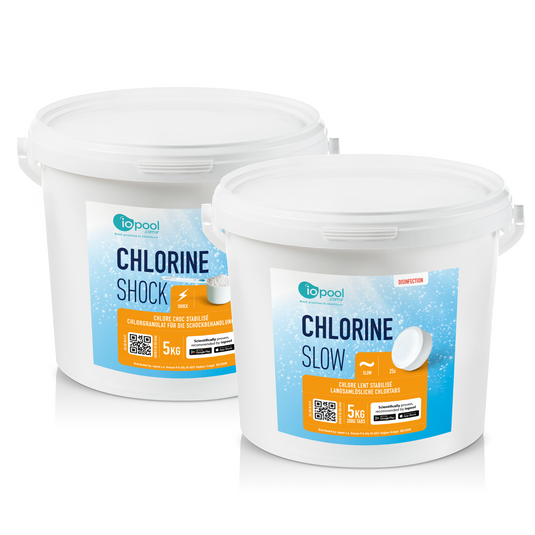
Trichlor (slow-release tablets) — the most common form for private pools. pH around 2.5, which tends to slightly lower water pH over time. Contains 85–90% active chlorine, dissolves slowly for a steady, continuous supply of disinfectant. Stabilizer is built in.
Dichlor — more neutral pH (~7), less impact on water balance. Dissolves faster and can be used for both maintenance and shock treatments. Contains 60–65% active chlorine, also includes built-in stabilizer.
Advantages
- Ease of use: place tablets in a floating dispenser or skimmer basket — no large liquid volumes to handle
- Continuous, regular dosing: slow dissolution provides a stable chlorine supply without sudden peaks or drops
- Built-in stabilizer: no need to add a separate product — tablets already protect chlorine from UV degradation
- Good shelf life: unlike liquid chlorine, tablets can be stored for months without losing effectiveness, as long as they're kept dry and away from heat
- Slightly acidic pH (trichlor): naturally compensates for the water's tendency to rise in pH, simplifying chemical management
Disadvantages
- Stabilizer buildup: every tablet adds both chlorine and stabilizer. Over a full season, and from one season to the next without dilution, the stabilizer level can exceed 100 ppm — the over-stabilization threshold where chlorine loses much of its disinfecting power
- Less suited to intensive shock treatments: for a one-off chlorine shock, fast-dissolving unstabilized shock chlorine is more appropriate
- Slightly higher cost than liquid chlorine, offset by convenience and duration of action
Liquid Chlorine vs Tablets: Comparison
| Liquid Chlorine | Chlorine Tablets | |
|---|---|---|
| Form | Liquid | Solid (tablets, pucks) |
| Active chlorine content | 10–12% | 60–90% depending on type |
| Built-in stabilizer | No | Yes |
| Effect on pH | Raises it (pH ~13) | Slight decrease (pH ~2.5 for trichlor) |
| Shelf life | ~6 months | Several months to years |
| Ease of use | Moderate | High |
| Risk of over-stabilization | No | Yes (monitor regularly) |
| Best for | Public pools, quick treatments, chlorinating without raising stabilizer | Regular maintenance of private outdoor pools |
Which Form to Choose?
Choose chlorine tablets if you manage a private outdoor pool and want the simplest, most autonomous solution. A floating dispenser, tablets replaced every one to two weeks depending on consumption, and the basics are covered. Just check your stabilizer level during the season to avoid excessive buildup.
Choose liquid chlorine if your stabilizer level is already too high and you need to chlorinate without adding more, if you're running a large pool with an automatic dosing system, or if you need fast, immediate action.
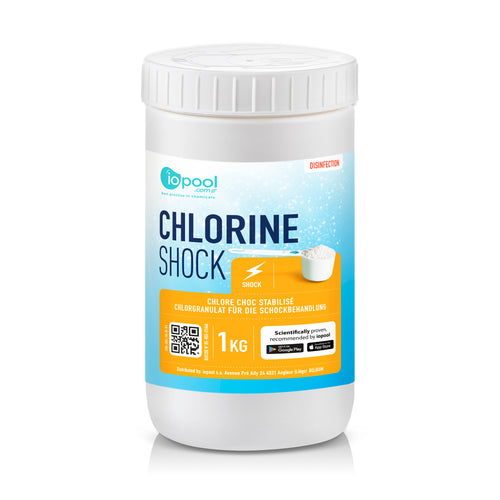
Both can complement each other: tablets for day-to-day background maintenance, liquid chlorine or unstabilized shock chlorine for occasional corrections when needed.
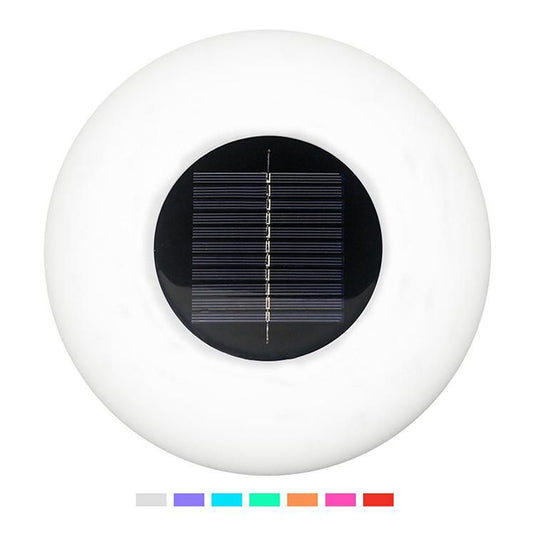
With a connected analyzer like the iopool EcO probe, you can track your chlorine level, pH and stabilizer in real time — and know exactly when to switch approaches rather than guessing.
FAQ
Can I use regular household bleach in my pool instead of liquid chlorine? Technically yes, but it's not ideal. Household bleach has a much lower active chlorine concentration (around 5–7%) compared to pool-grade liquid chlorine (10–12%). You'd need to use very large quantities, making it impractical and poorly cost-effective for anything larger than a very small pool.
Do I need to add stabilizer if I use chlorine tablets? Generally no. Trichlor and dichlor tablets already contain built-in stabilizer. Adding separate stabilizer on top risks pushing your CYA level too high. Monitor it at least once mid-season to make sure it's not accumulating.
Why does my pool smell strongly of chlorine even though the level seems correct? That smell isn't from free chlorine — it's from chloramines, which form when chlorine reacts with organic matter (sweat, sunscreen, urine). A strong smell usually means active chlorine is depleted and the water needs a shock treatment, not less chlorine.
Can I mix liquid chlorine and tablets in the same pool? Yes, but not simultaneously. Adding liquid chlorine on top of an active tablet dispenser can cause a violent reaction. If using both, remove the tablet dispenser, add the liquid chlorine, let it circulate, then reintroduce the tablets once the levels have stabilized.
How long does liquid chlorine stay effective once opened? Around 6 months under good storage conditions (cool, shaded, sealed). Beyond that, it can lose up to 50% of its potency. Always check the product date and avoid bulk buying unless you can use it quickly.