Red Eyes After Swimming: It's Not the Chlorine — Here's What's Actually Happening

Short answer: If your eyes sting, turn red, or burn after swimming, chlorine is almost never the real cause. In 95% of cases, the irritation comes from one of two things: pH that's out of range, or chloramines — compounds formed when chlorine reacts with the organic matter swimmers bring into the water. The paradox: the stronger your pool smells of chlorine and the more it irritates, the more it's actually lacking active free chlorine. This guide explains the exact causes, how to identify which one you're dealing with, and how to fix it for good.
The Big Misconception: Chlorine Isn't the Problem
Nearly every swimmer who suffers from irritation after a swim assumes their pool has too much chlorine. It's usually the opposite.
A well-maintained pool, with pH between 7.2 and 7.4 and free chlorine between 1 and 3 ppm, doesn't sting your eyes, doesn't irritate your skin, and barely smells. If your pool is causing irritation, the water is out of balance — not too clean.
The two real culprits are:
- pH out of range, which makes the water chemically aggressive on eyes and mucous membranes
- Chloramines, spent compounds formed when chlorine has already reacted with organic matter — irritating, foul-smelling, and completely inactive as a sanitizer
That strong "pool smell" is a sign of dirty water, not over-chlorinated water. The characteristic odor comes from chloramines (spent chlorine), not from free chlorine — which is nearly odorless when properly dosed.
Cause #1: pH Is Out of Range
Your eyes have a natural pH of around 7.5. When your pool water strays too far from that value, contact becomes irritating — even with no chlorine at all, even in bacteriologically clean water.
| Water pH | Effect on eyes and skin |
|---|---|
| Below 7.0 | Acidic water — burning, intense stinging, skin irritation |
| 7.0 – 7.2 | Slightly acidic — irritation possible in sensitive swimmers |
| 7.2 – 7.4 | Ideal zone — maximum comfort, no irritation |
| 7.4 – 7.6 | Slightly alkaline — tolerable but chlorine less effective |
| Above 7.6 | Alkaline — red eyes, filmy feeling, chlorine nearly inactive |
| Above 8.0 | Very alkaline — severe irritation, swimming not recommended |
Something most pool owners don't realize: every chemical you add to the water shifts the pH. Granular chlorine, for example, has a pH of around 11 — adding it temporarily spikes your water's pH. If you don't recheck and adjust after treating, the water can stay highly alkaline for hours, irritating anyone who swims in it.
How to Fix pH That's Out of Range
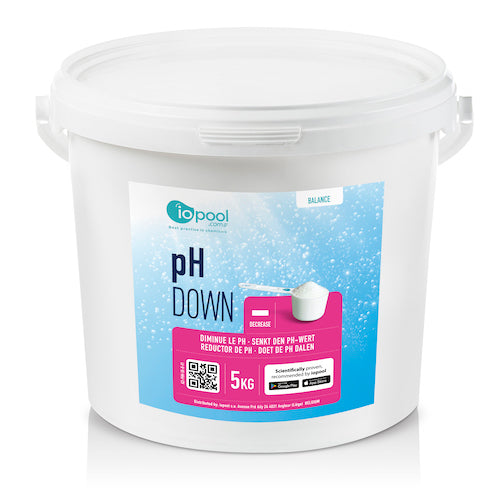
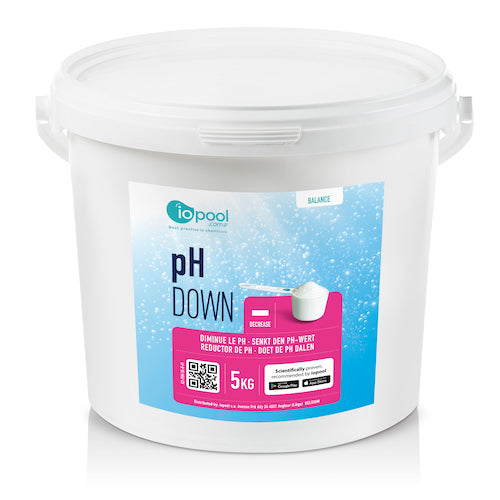
- pH too high (above 7.4) → add pH decreaser (sodium bisulfate or muriatic acid)
- pH too low (below 7.2) → add pH increaser (sodium carbonate)
- Always correct Total Alkalinity (TA) before adjusting pH — unstable TA makes pH corrections temporary and unpredictable
- Wait at least 2 hours after adding any chemical before retesting and swimming
Cause #2: Chloramines Are Building Up
Chloramines form when free chlorine reacts with the organic matter swimmers introduce into the water: sweat, sunscreen, urine, saliva, skin cells. They're volatile gas compounds — they off-gas at the water surface and above the pool, irritating eyes even without direct water contact.
What chloramines cause:
- Red, watery eyes with a burning or gritty sensation
- Skin irritation, itching, dryness after swimming
- That strong, unmistakable "pool smell"
- Respiratory irritation (coughing, nasal irritation) in sensitive individuals
The irritation threshold: combined chlorine levels as low as 0.2 ppm are enough to cause eye irritation. That's a very small amount — and it's easily reached after heavy swimming without regular shock treatment.
| Combined Chlorine (Chloramines) | What It Means |
|---|---|
| Below 0.2 ppm | Acceptable — little to no irritation |
| 0.2 – 0.6 ppm | Irritating for sensitive swimmers |
| Above 0.6 ppm | Irritating for all swimmers — shock treatment needed immediately |
How to detect chloramines: measure free chlorine and total chlorine separately. The difference between the two is your combined chlorine (chloramines). If total chlorine is significantly higher than free chlorine, chloramines are present in quantity. This requires a DPD1/DPD3 photometer or an analyzer capable of distinguishing free from total chlorine.
How to Fix a Chloramine Buildup
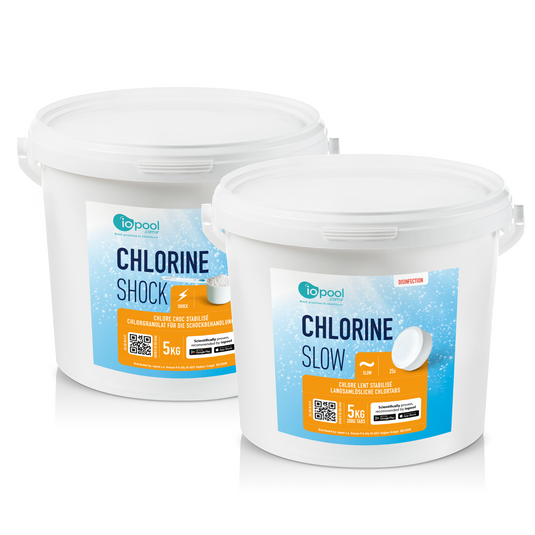
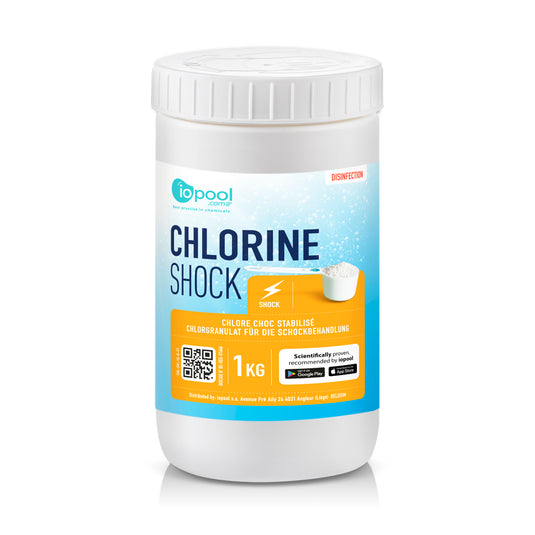
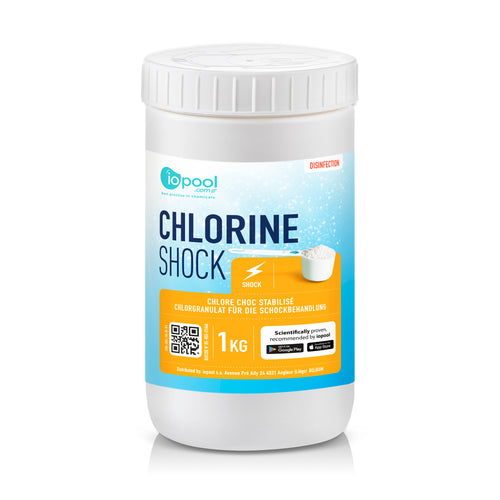
- Shock with unstabilized chlorine (calcium hypochlorite) — the temporary overdose "burns off" existing chloramines
- Alternative: non-chlorine shock (potassium monopersulfate, sold as MPS or OXY shock) — effective and non-irritating, ideal after heavy bather load
- Run the filter continuously (24/7) during treatment
- Aerate the water: point return jets toward the surface, encourage circulation
- Ask swimmers to shower before entering — significantly reduces the organic load that creates chloramines in the first place
Cause #3: Chlorine Overdose
Less common than the first two, a genuine free chlorine overdose (above 3–5 ppm) does cause irritation. It typically happens right after a shock treatment if doses weren't calculated correctly, or in a small, sun-exposed pool where chlorine additions weren't adjusted to the volume.
| Free Chlorine Level | Effect |
|---|---|
| 1 – 3 ppm | Ideal zone — no irritation |
| 3 – 5 ppm | Tolerable but may irritate sensitive swimmers |
| Above 5 ppm | Irritating — avoid swimming until levels drop |
How to fix it: stop adding chlorine, keep the filter running, and let sun and circulation naturally bring levels back below 3 ppm. Don't try to "neutralize" the chlorine with a product — time and filtration are all you need.
Diagnosis Table: Which Symptom Points to Which Cause
| Symptom | Likely Cause | How to Confirm | Immediate Fix |
|---|---|---|---|
| Red, burning eyes and itchy skin | pH out of range (too high or too low) | Test pH | Adjust pH with pH decreaser or increaser |
| Strong chlorine smell and eye irritation | High chloramines (low free chlorine) | Test free vs total chlorine | Shock with unstabilized chlorine or non-chlorine shock |
| Irritation right after adding chemicals | pH destabilized by treatment | Test pH 2 hours after treatment | Rebalance pH, wait before swimming |
| Dry, tight skin after swimming | Chloramines or pH too low | Test pH and combined chlorine | pH correction and shock treatment |
| Irritation only after long swims or storms | Chloramine spike from organic load | Test combined chlorine after the event | Preventive shock treatment as a routine |
| Immediate, intense irritation on entry | pH very high (above 8.0) or chlorine overdose | Test pH and free chlorine immediately | Don't swim — correct before any use |
How to Prevent It From Coming Back
Almost all pool irritation is preventable. It happens either because pH drifted undetected, or because the organic load after a heavy swim session or storm wasn't addressed with a timely shock treatment.
The Right Habits
| Situation | Preventive Action |
|---|---|
| Before every swim | Check that pH is between 7.2 and 7.4 |
| After adding any chemical | Wait 2 hours minimum, retest pH before swimming |
| After heavy bather load (party, weekend) | Non-chlorine shock (OXY/MPS) the same evening |
| After heavy rain | Test pH and chlorine within 24 hours, adjust as needed |
| Weekly routine | Preventive non-chlorine shock — eliminates chloramines before they accumulate |
The Most Effective Hygiene Rule Nobody Follows
Showering before swimming reduces the organic load introduced into the water by 50 to 70%. Less organic matter means less reaction with chlorine, which means fewer chloramines. It's the single most effective preventive measure — and the most consistently ignored.
The Role of Continuous Monitoring
The vast majority of irritation episodes happen because pH or chlorine levels drifted without the owner noticing — often after a poorly dosed chemical addition, a storm, or a heatwave that accelerates chlorine degradation.
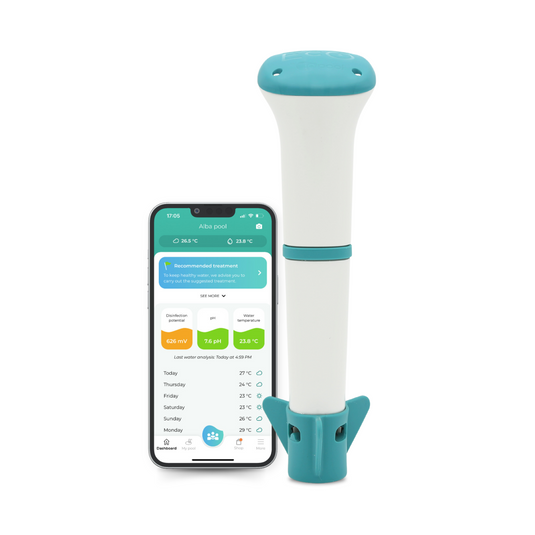
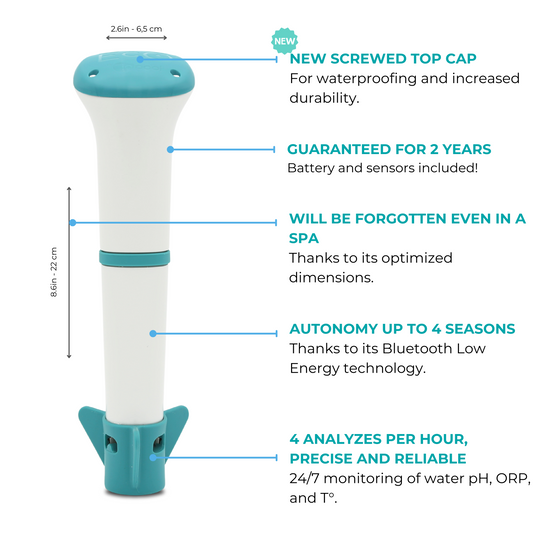
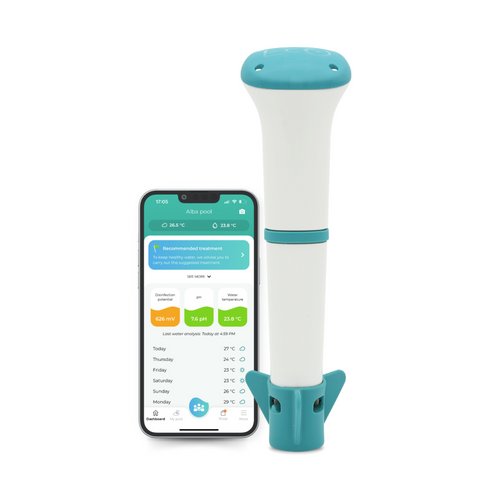
A connected pool analyzer like the iopool Eco Start continuously monitors pH, temperature, and ORP and sends you a smartphone alert the moment a parameter drifts out of its ideal range. You correct before the swim, not after. No more unpleasant surprises, no more avoidable irritation.
FAQ
Why do my eyes sting after swimming even though the water looks clear?
Clear water doesn't mean balanced water. The two main causes of eye irritation — pH out of range and chloramines — don't change how the water looks. Only testing your parameters tells you what's actually going on. Start with pH: it's the first thing to check.
Can I be allergic to chlorine?
A true chlorine allergy is extremely rare. In nearly all cases, symptoms attributed to a "chlorine allergy" are actually reactions to chloramines or unbalanced pH — both entirely preventable with proper water management. If symptoms are severe and consistent, see an allergist, but test your water parameters first.
Why does my pool smell strongly of chlorine when I add it regularly?
A strong chlorine smell means your water has too many chloramines — and therefore not enough active free chlorine. It's a warning sign, not a sign of good sanitation. The fix is a shock treatment to destroy the chloramines, not cutting back on chlorine.
How long should I wait after shocking before swimming?
Generally 24 hours after a chlorine shock. Confirm that free chlorine is back below 3 ppm and pH is between 7.2 and 7.4 before allowing swimming. After a non-chlorine shock (MPS/OXY), the wait is typically 8 to 12 hours — check your product's instructions.
My pool is more irritating after a weekend with lots of swimmers — is that normal?
Yes, and it's one of the most common scenarios. Heavy bather load introduces a large amount of organic matter (sweat, sunscreen) into the water, triggering a chloramine spike and a drop in free chlorine. That's why a preventive shock treatment the evening after a big swim session is an essential habit.
Do swim goggles actually protect against irritation?
Against direct water contact, yes. But chloramines are volatile gases present above the water surface — they can irritate eyes even without contact with the water, even for people sitting poolside. The only real protection is fixing the chemistry at the source.
Can a connected pool analyzer actually prevent irritation?
Yes — indirectly but effectively. Most irritation episodes happen when pH drifts or chloramines accumulate undetected. A device like the iopool Eco Start monitors pH and ORP continuously and alerts you the moment a parameter drifts out of range, so you can correct before a swim rather than after. That's the difference between preventing a problem and suffering through one.
Still dealing with recurring irritation despite regular maintenance? Share your parameters in the comments — pH, chlorine level, treatment type, and typical bather load — and our team will help you track down the cause.
Compre los esenciales