Chlorine vs Active Oxygen: Which Pool Treatment Should You Choose?

In Brief
Chlorine and active oxygen both disinfect pool water, but they work differently. Chlorine is long-lasting, cost-effective, and suited to all pool sizes — it's the standard solution for outdoor pools used regularly. Active oxygen acts fast, leaves no smell, and doesn't irritate skin, but it degrades quickly and requires more frequent application. The right choice depends on your pool size, how often you use it, and your personal constraints.
How Does Each Product Work?
Chlorine
Chlorine is the most widely used disinfectant in private pools. Once dissolved in water, it releases hypochlorous acid, which destroys bacteria, viruses, algae and other contaminants. Its effectiveness is directly tied to pH: between 7.2 and 7.4, chlorine operates at peak efficiency. Outside this range, it loses a significant part of its disinfecting power — even if the measured level appears correct.
It comes in several forms:
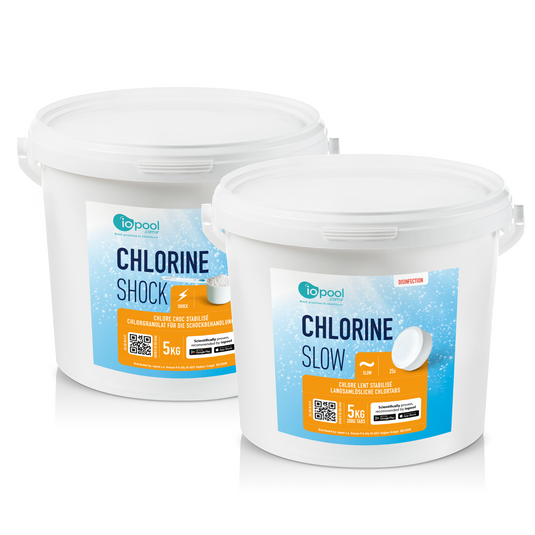
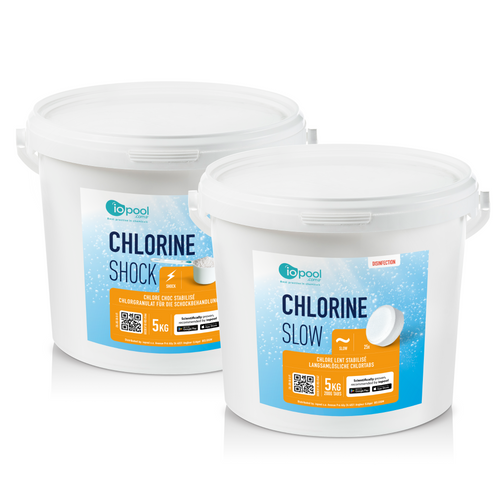
- Slow-release tablets (slow chlorine): for day-to-day maintenance
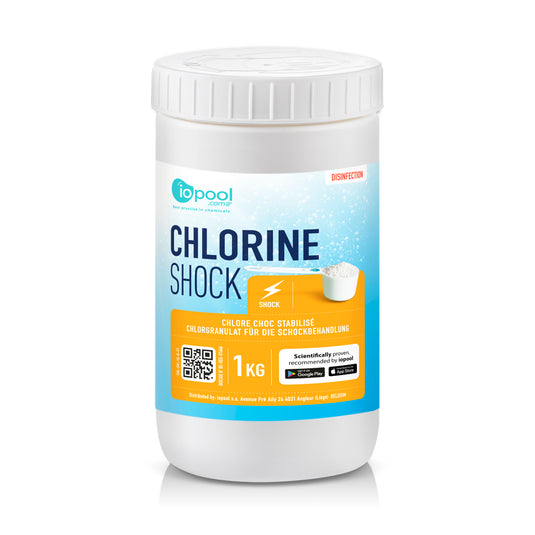
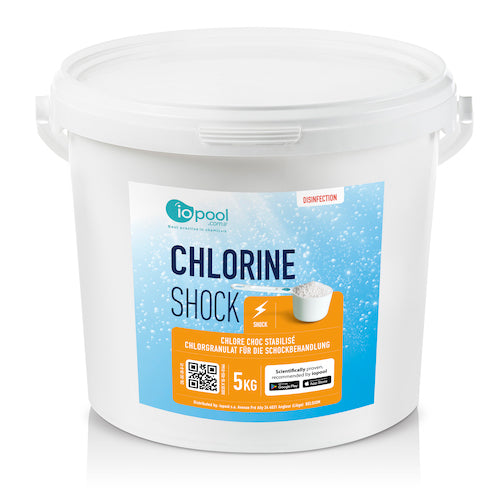
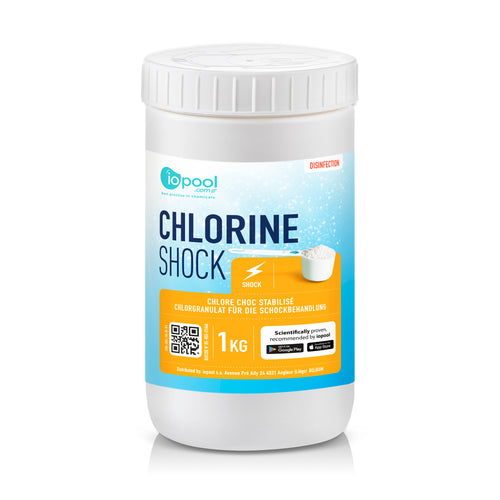
- Fast-acting granules (shock chlorine): for intensive one-off treatments
- Liquid chlorine: less common, used in specific situations
Active Oxygen
Active oxygen — also known as stabilized hydrogen peroxide or MPS (monopotassium persulfate) depending on the form — oxidizes impurities in the water and breaks them down into water and oxygen, leaving no chemical residue. It's chlorine-free, odorless, and doesn't irritate skin or eyes.
Its action is fast but short-lived: active oxygen degrades quickly in water, especially at high temperatures or in direct sunlight. It's described as "non-persistent" — it doesn't maintain continuous protection in the pool.
Chlorine vs Active Oxygen: Key Differences
| Chlorine | Active Oxygen | |
|---|---|---|
| Disinfecting effectiveness | High and long-lasting | Fast but short-lived |
| Persistence | Yes (especially stabilized) | No |
| Skin tolerance | Moderate (depends on dosing) | Very good |
| Effect on pH | Possible fluctuation | Neutral |
| Cost | Low | Higher |
| Best for | Large pool, regular use | Small pool, sensitive skin |
Persistence and Effectiveness
This is the core difference. Stabilized chlorine maintains continuous disinfecting action for several days. It suits all pool types, regardless of size or sun exposure.
Active oxygen acts quickly but disappears fast. To keep the water clean with this product alone, treatments need to be repeated every 48 to 72 hours depending on pool usage, temperature and sunlight. In a large, heavily used or sun-exposed pool, this quickly becomes a significant time and cost burden.
Skin Comfort
Active oxygen's main advantage: no skin irritation, no red eyes, no smell on skin or swimwear. For people with sensitive skin, young children, or frequent swimmers, this is a real benefit.
Chlorine can be irritating when poorly dosed or when pH is out of balance. The characteristic "pool smell" isn't actually caused by chlorine itself — it comes from chloramines, compounds formed when chlorine reacts with organic matter (sweat, urine, sunscreen). Well-dosed chlorine in properly balanced water is far less irritating than most people expect.
Effect on pH
Active oxygen doesn't affect water pH, which simplifies chemical management. Chlorine can cause pH to fluctuate depending on its form: shock granules tend to lower it, while some tablets can raise it slightly. Regular pH monitoring is essential regardless of which product you use.
Cost
Chlorine is significantly cheaper than active oxygen for equivalent effectiveness. For a large, regularly used pool, the budget difference over a full season can be substantial. Active oxygen makes more financial sense for small volumes (spas, pools under 20 m³) or as an occasional complement to a chlorine-based routine.
Compatibility
The two products are incompatible with each other: never add both to the pool without waiting the appropriate time between applications — generally 24 to 48 hours — to avoid a violent chemical reaction.
Which Product for Which Situation?
Choose active oxygen if:
- Your pool is under 20–25 m³ and not heavily exposed to sun
- You use it occasionally (a few weeks per year)
- You or your family have sensitive skin, young children, or a chlorine sensitivity
- You want an occasional shock treatment to complement a chlorine-based routine
Choose chlorine if:
- Your pool is over 20 m³
- It's an outdoor pool with strong sun exposure (especially with stabilized chlorine)
- The pool is used regularly by multiple people
- You want simple management: a good weekly dose is enough to maintain healthy water
Can You Use Both?
Yes, but carefully. A common approach is to use chlorine as the continuous background treatment and active oxygen occasionally for shock treatments — for example after heavy use or a rainy period. Respect the waiting time between the two products and check water levels before swimming.
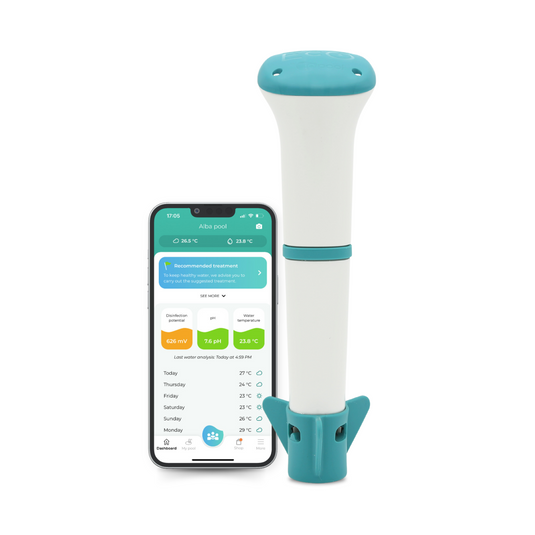
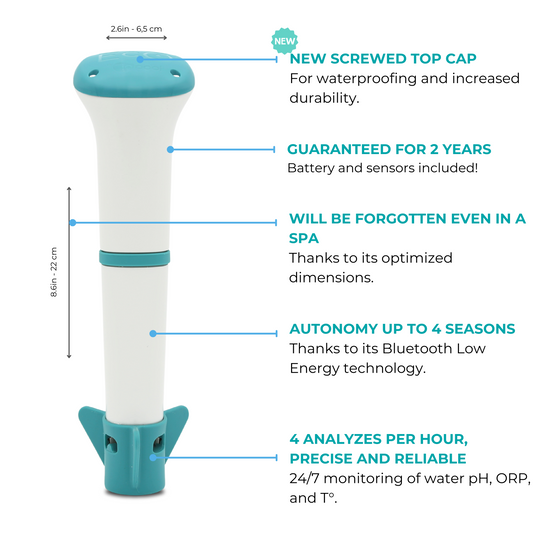
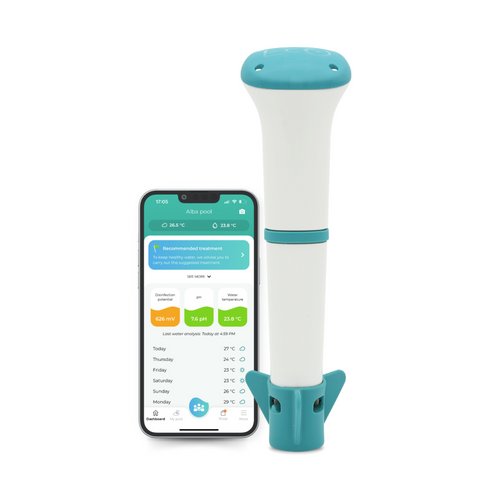
With a connected analyzer like the iopool EcO probe, you can track your pool's disinfection level, pH and temperature in real time from your smartphone — and get alerts when it's time to act, whatever treatment you use.
FAQ
Is active oxygen safer than chlorine? Not necessarily safer — just different. Active oxygen is gentler on skin and produces no smell, but it degrades quickly and can leave water underprotected if not applied frequently enough. Chlorine, properly dosed and with balanced pH, is very safe and far less irritating than its reputation suggests.
Can I switch from chlorine to active oxygen mid-season? Yes, but you need to wait until the chlorine level in the water has dropped to near zero before introducing active oxygen, to avoid a chemical reaction. Test the water carefully before making the switch.
Why does pool water smell like chlorine if chlorine itself has no smell? The "pool smell" comes from chloramines — compounds formed when chlorine reacts with organic matter like sweat, urine and sunscreen. Strong chloramine smell is actually a sign that the water needs a shock treatment, not that there's too much chlorine.
Does active oxygen affect the pH? No. Active oxygen is pH-neutral, which is one of its practical advantages for water balance management.
What's the difference between active oxygen and ozone treatment? They're different technologies. Active oxygen is a chemical product added directly to the water. Ozone treatment is an electrolytic system that generates ozone gas to disinfect water. Both are chlorine-free, but ozone systems require specific equipment and a higher initial investment.