Pool Filtration Time: How to Calculate It and Adjust It by Season

In Brief
Pool filtration time is the daily duration your pump needs to run to filter the entire volume of water at least once. The formula is simple: pool volume (m³) ÷ pump flow rate (m³/h) = one filtration cycle. In summer above 25°C, run 3 to 4 cycles per day (15–20 hours). In spring and autumn below 20°C, one cycle is enough. Always split filtration across the day — never run it as a single overnight block.
Why Filtration Time Matters
The filtration pump is the heart of your pool. It circulates the water, passes it through the filter to remove suspended particles (dust, pollen, organic matter), and ensures that treatment products are evenly distributed throughout the basin.
Without sufficient filtration, the chemicals you add don't spread properly, impurities accumulate, and conditions become favourable for bacteria and algae. Too little filtration is often the first — and most overlooked — explanation behind water that turns cloudy or green despite seemingly correct chemical treatment.
The minimum goal: pass the entire volume of your pool through the filter at least once per day. This is called a full filtration cycle, or turnover.
Step 1 – Calculate Your Pool's Volume
Before calculating filtration time, you need the exact volume of your pool in m³.
Rectangular or square pool:
Length × Width × Average Depth = Volume in m³ Example: 10 m × 4 m × 1.5 m = 60 m³
Round or circular pool:
3.14 × Radius² × Average Depth = Volume in m³ Example: 3.14 × 3² × 1.5 m = 42.4 m³
Kidney-shaped or irregular pool:
Length × Maximum Width × Average Depth × 0.85 = Volume in m³ The 0.85 coefficient approximates the real volume of a non-rectangular pool.
If your pool has a variable depth (sloped floor), calculate the average depth by adding the minimum and maximum depths and dividing by 2.
Step 2 – Find Your Pump's Real Flow Rate
Your pump's flow rate — expressed in m³/h — tells you how much water it processes in one hour. You'll find it on the nameplate or in the manufacturer's manual.
The stated flow rate is a maximum measured under ideal conditions. In practice, pipe length, bends, filter resistance and clogging all reduce it. Work with 80% of the nominal flow rate for a realistic calculation.
Example: pump rated at 15 m³/h → estimated real flow rate of 12 m³/h
If you don't know your pump's flow rate, a flow meter on the return line gives an accurate reading.
Step 3 – Calculate Your Base Filtration Time
Formula: Pool volume (m³) ÷ Pump flow rate (m³/h) = duration of one filtration cycle (hours)
Example: 60 m³ ÷ 12 m³/h = 5 hours per cycle
This is the time needed to filter the entire pool once. It's your baseline — but it's rarely enough on its own in summer.
Step 4 – Adjust by Water Temperature
Water temperature is the most important variable. The warmer the water, the more bacterial and algal growth is encouraged, and the longer filtration needs to run.
| Water Temperature | Recommended Cycles | Daily Filtration Time |
|---|---|---|
| Above 25°C | 3 to 4 cycles | 15 to 20 h/day |
| 20–24°C | 2 to 3 cycles | 10 to 15 h/day |
| 15–20°C | 1 to 2 cycles | 5 to 10 h/day |
| 10–15°C | ½ cycle | 2 to 4 h/day |
| Below 10°C | Optional | 1 to 2 h/day is sufficient |
During periods of heavy use — many swimmers, intense heat, after a party — add one extra cycle.
When Should the Pump Run?
This is one of the most overlooked questions, yet it has a real impact on treatment effectiveness.
Daytime filtration is far more effective than overnight. UV rays degrade chlorine throughout the day; active filtration continuously redistributes it. Running the pump only at night — when no one swims and there's no sun — wastes much of its benefit.
A practical approach: split filtration into two daily windows, one in the morning (before or during bathing hours) and one in the late afternoon. This ensures strong chemical circulation precisely when the pool is most used.
Avoid shifting everything to off-peak overnight hours just to save electricity. Short-term you save a few euros; medium-term, you risk an unbalanced pool that will cost far more to treat.
Filtration Too Short: What It Looks Like
The signs of insufficient filtration tend to build gradually:
- Water that slowly turns cloudy despite apparently correct chemical levels
- Algae appearing on walls or the floor even with chlorine present
- Chlorine levels dropping quickly after each addition
- Filter clogging faster than normal
- Uneven distribution of treatment products, leaving some areas under-treated
Don't Forget Filter Maintenance
A clogged filter reduces the pump's real flow rate and undermines filtration effectiveness — even if the running time is correct.
- Sand filter: backwash every 2–4 weeks in season, or when pressure rises 0.5 bar above the reference value. Replace the sand every 5 years.
- Cartridge filter: rinse weekly during peak season, replace the cartridge 1–2 times per season depending on use.
- Diatomite filter: clean according to the manufacturer's schedule, typically every 4–6 weeks.
A clean filter means effective filtration — even with a modestly sized pump.
Practical Example
Pool: 8 m × 4 m × 1.5 m average depth = 48 m³ Pump: nominal flow rate 14 m³/h → estimated real flow rate 11.2 m³/hWater temperature in July: 27°C → 3 cycles recommended
- 1 cycle = 48 ÷ 11.2 = 4.3 hours
- 3 cycles = 4.3 × 3 = approximately 13 hours/day
Suggested split: 6:00–12:00 (6 h) + 15:00–22:00 (7 h).
FAQ
Is there a quick rule of thumb for filtration time? Yes: count one full filtration cycle per 10°C of water temperature. At 20°C → 2 cycles; at 30°C → 3 cycles. It's a rough guide, but it works as a starting point before applying the precise formula.
Can I run filtration at night to save on electricity? You can use off-peak rates for part of the filtration, but avoid running everything at night. The pool needs active filtration during the day to properly distribute chlorine and catch particles while the pool is in use. A good compromise: one morning slot at full rate, one off-peak slot at night for the remainder.
What happens if the pump runs too long? No direct harm to the water, but you waste electricity and accelerate filter wear. Calibrating the right time for your situation is worth doing once properly rather than over-running "just to be safe."
How do I know if my pump flow rate has dropped? Clues: longer filtration needed to achieve the same water clarity, pressure gauge reading higher than usual, reduced jet strength. When in doubt, have the pump and filter inspected — a partial blockage or worn impeller can cut flow rate significantly.
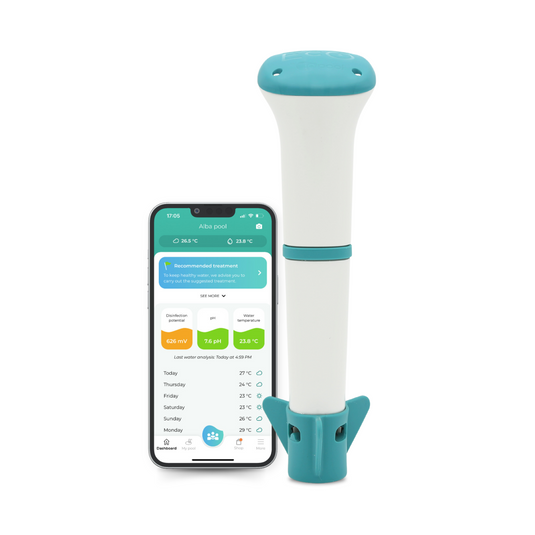
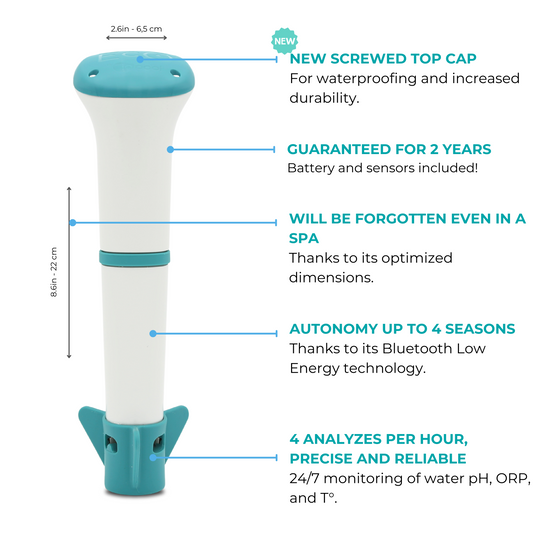
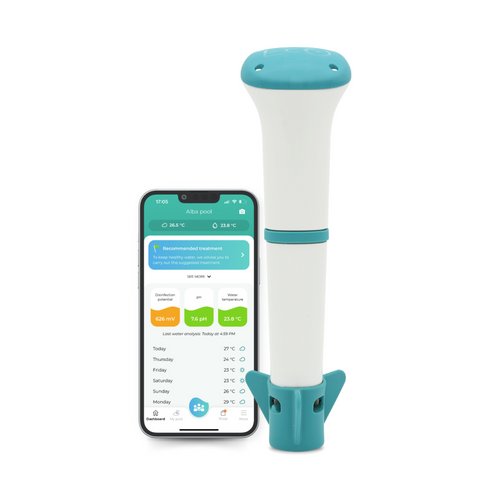
Does the iopool app help with filtration time? The iopool app generates a filtration time recommendation based on your pool profile and current water temperature readings from the EcO probe. It's the simplest way to stay calibrated throughout the season without recalculating manually each time.