pH– and Muriatic Acid for Pools: What They're For and How to Use Them Safely

In Brief
Muriatic acid (hydrochloric acid, HCl) and its dry equivalent pH– (sodium bisulfate) are the main products used to lower pH and reduce total alkalinity in a pool. For private pools, dry acid (pH– granules) is the recommended option: safer to handle, easier to dose, and just as effective for routine corrections. Liquid muriatic acid is more suitable for professional use or intensive surface treatments. Both require full protective equipment and must never be mixed with chlorine.
What Is Muriatic Acid (pH–)?
Muriatic acid — also called hydrochloric acid (HCl) — is an aqueous solution of hydrogen chloride. In its concentrated form, it's a strong, corrosive acid that releases irritating fumes. Pool-grade muriatic acid is sold diluted, at concentrations between 14% and 33%.
In pool maintenance, it's used for three main purposes:
- Lowering pH: the most common use. When pH exceeds 7.6, chlorine loses much of its effectiveness and the water can become irritating for swimmers.
- Reducing total alkalinity (TA): using a specific pump-off procedure (see below), acid targets alkalinity more than pH when added in a concentrated spot.
- Dissolving limescale deposits: on pool walls, jets or around the waterline, it removes calcium build-up that conventional products can't handle.
Liquid Acid vs Dry Acid (pH–): Which to Choose?
| Liquid Muriatic Acid | Dry Acid (pH–) | |
|---|---|---|
| Form | Liquid solution | Granules or powder |
| Concentration | 14–33% | Equivalent effect |
| Handling safety | Requires more precautions (fumes) | Safer, easier to dose |
| Action speed | Fast | Slightly slower |
| Best for | Professional pools, intensive surface treatment | Routine corrections in private pools |
For everyday domestic use, dry acid (pH–) is the recommended option. It delivers the same results as liquid acid for pH and alkalinity corrections, with a significantly lower risk during handling.
Required Protective Equipment
Before any handling — liquid or dry — always wear:
- Sealed protective goggles (not sunglasses)
- Chemical-resistant gloves (nitrile or thick rubber)
- Long-sleeved clothing and closed-toe shoes
- For concentrated liquid acid: a respiratory mask to avoid inhaling fumes
Always work outdoors or in a well-ventilated space. Keep clean water nearby to rinse immediately in case of skin or eye contact.
Absolute rule: always add acid to water, never water to acid. Pouring water onto concentrated acid can trigger a violent exothermic reaction with splashing. Pre-dilute in a bucket of water before adding to the pool, or pour directly into moving water.
How to Lower pH with Acid
Before Acting: Measure
Check your pH with a colorimetric test kit or test strips. The target range is 7.2 to 7.6. Note the current value before adding anything.
Indicative Dosing
To lower pH by approximately 0.2 points in a 50 m³ pool:
- Dry acid (pH–): approximately 150 to 200 grams
- Liquid muriatic acid at 23%: approximately 250 to 300 ml
These are indicative values. The exact dose depends on your total alkalinity, water temperature and starting pH. Always work in small successive doses.
Step-by-Step Procedure
- Keep the pump running — maintain water circulation.
- Pre-dilute (dry acid): dissolve granules in a bucket of warm water before pouring into the pool. For liquid acid: pour directly in a slow, steady stream in front of a return jet.
- Distribute along the pool edge, not in a single spot.
- Run the pump for at least 4 hours to homogenize.
- Retest pH. If still too high, repeat with a smaller dose.
- Never add a second dose before retesting — pH continues to change for several hours after addition.
Wait at least 4 to 6 hours after the last addition before swimming, and confirm pH is within the 7.2–7.6 range.
How to Reduce Alkalinity with Acid
This procedure differs from pH correction: the goal is to target total alkalinity (TA) preferentially.
- Turn off the circulation pump.
- Pour the acid in one concentrated spot — at the center of the pool or its deepest point — without pre-diluting in a bucket.
- Wait 1 to 2 hours with the pump off.
- Restart the pump and circulate for 4 to 6 hours.
- Retest both TA and pH.
The concentrated acid zone reacts preferentially with carbonates (alkalinity) rather than the overall pH. The pH will rise slightly once equilibrium is restored — this is normal and expected.
Using Acid to Clean Pool Surfaces
Diluted muriatic acid effectively dissolves limescale deposits on pool walls, around the waterline or on jets:
- Partially or fully drain the pool depending on the area being treated
- Apply a diluted solution (1 part acid to 10 parts water) with a brush or sponge
- Leave for a few minutes, then rinse thoroughly
- Never leave concentrated acid in prolonged contact with a vinyl liner — it can degrade it
What Not to Do
- Never mix acid with chlorine or any other pool treatment product — risk of toxic gas release
- Do not pour into the skimmer — acid can damage the basket, seals and filtration system
- Do not treat in windy conditions — fumes from liquid acid can disperse unpredictably
- Do not store near chlorine — keep separately in ventilated spaces, away from heat and out of reach of children
- Do not dispose of leftover acid down drains — dispose in accordance with local hazardous waste regulations
FAQ
What's the difference between muriatic acid and pH–? Muriatic acid (liquid hydrochloric acid) and pH– (dry sodium bisulfate) achieve the same result — lowering pH and alkalinity — but in different forms. Liquid acid is faster and stronger but more hazardous to handle. Dry acid (pH–) is the standard option for private pool owners: safer, easier to dose, and available in most pool supply stores.
How long after adding acid can I swim? Wait at least 4 to 6 hours after the last addition, and confirm with a test that pH is back within the 7.2–7.6 range. Never swim before retesting.
Can I add acid directly into the skimmer? No. Pouring acid through the skimmer can damage the basket, the seals and the filtration pipes. Always add it directly to the pool water, distributed along the edges or in front of a return jet with the pump running.
Why does the pH go back up after I add acid? Two possible reasons: either the total alkalinity is very high (the water's buffering capacity continuously pushes pH back up), or you're not waiting long enough between corrections. If pH systematically rebounds, target the alkalinity specifically using the pump-off method before correcting pH.
Can I use acid to remove yellow or brown stains on pool walls? Diluted muriatic acid is effective against calcium and limescale deposits (white or greyish stains). For metal stains (iron, manganese — which appear yellow, brown or black), a specific stain remover formulated for this type of deposit is more appropriate. Always identify the cause before treating.
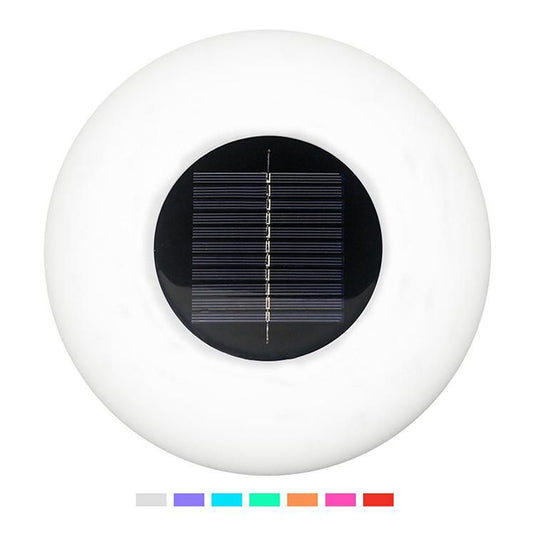
With a connected probe like the iopool EcO, do I still need to dose acid manually? The EcO probe monitors pH, ORP and temperature in real time and sends alerts when pH drifts out of range. The dosing itself remains manual — the probe tells you when and how much to act, based on your pool's current parameters. This avoids blind overcorrections that are often the source of chemical imbalances.